

Rest is Creative
a toad, a lady on a couch, and Baubo walk into a bar

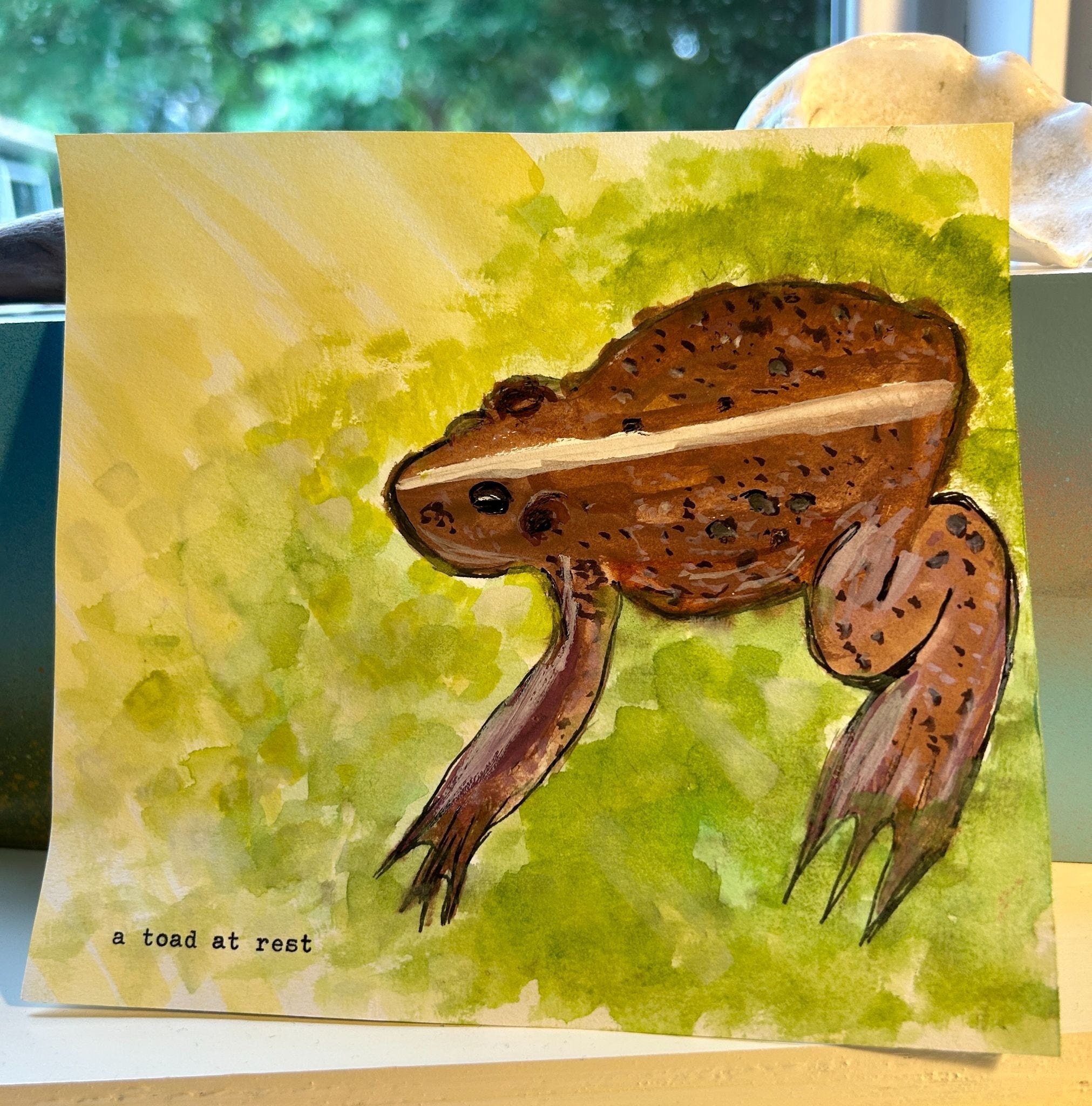
a toad at rest
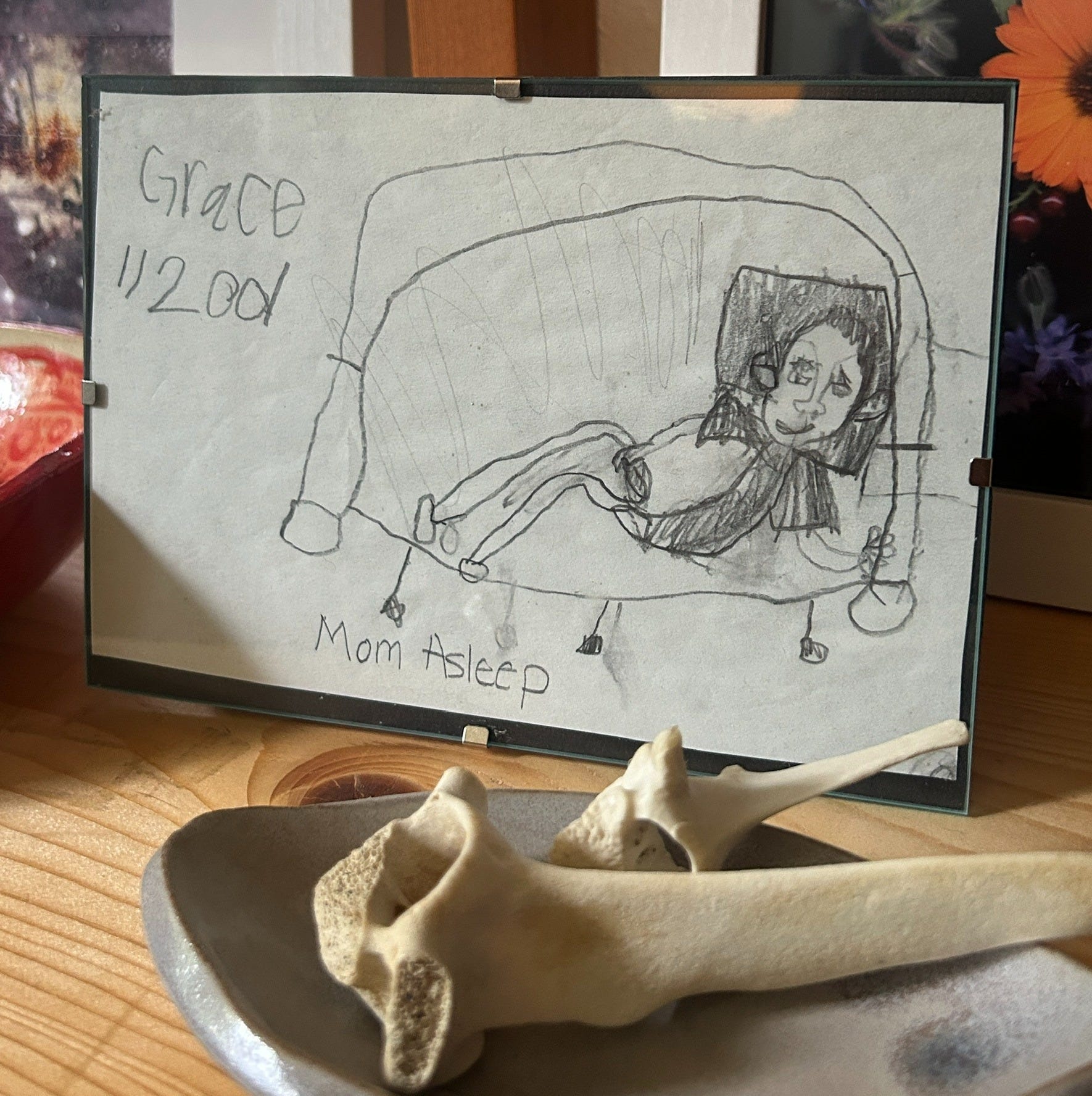
Lately, the fuzzy moments between being awake and falling asleep have been particularly vivid. My eyes close, and it’s like I’m slipping into an animated drawing lesson. Last Friday night, I saw a woman lying on a couch. A black line started outlining the details of the image, showing me how to draw the woman and the couch. I fell asleep thinking about this drawing my eldest made when they were six:
Last Saturday morning, half awake, mostly asleep, I watched the black line trace the image of a resting toad. I asked the internet about toads. It reminded me that toads are hibernators. To conserve energy, they rest when it’s cold. And toads that live in hot climates hide out during the day, dozing and saving energy for their late night exploits.
For many cultures, toads symbolize transformation and are associated with goddesses who bring death and re-birth. I laughed out loud when I ran into this blog post by Sara Wright that mentions Baubo, who it turns out, is associated with toads. Before she was an old Crone who flashed Demeter (hoping to shock her out of self-pity long enough to let the earth come back to life) Baubo was an ancient goddess of the earth, fertility, and regeneration. Once upon a time, Baubo had some serious toad energy.
(You can find my first essay about Baubo here).
a woman laying on a couch
Last Wednesday, before Jenn and I recorded our podcast episode about creativity as a punishment-free zone, she asked me what Joyful Practice principle I’d like us to work with this week. I opened our JP principles document, and my eyes landed on rest is creative. It’s been a busy couple of months. Rest sounded pretty good.
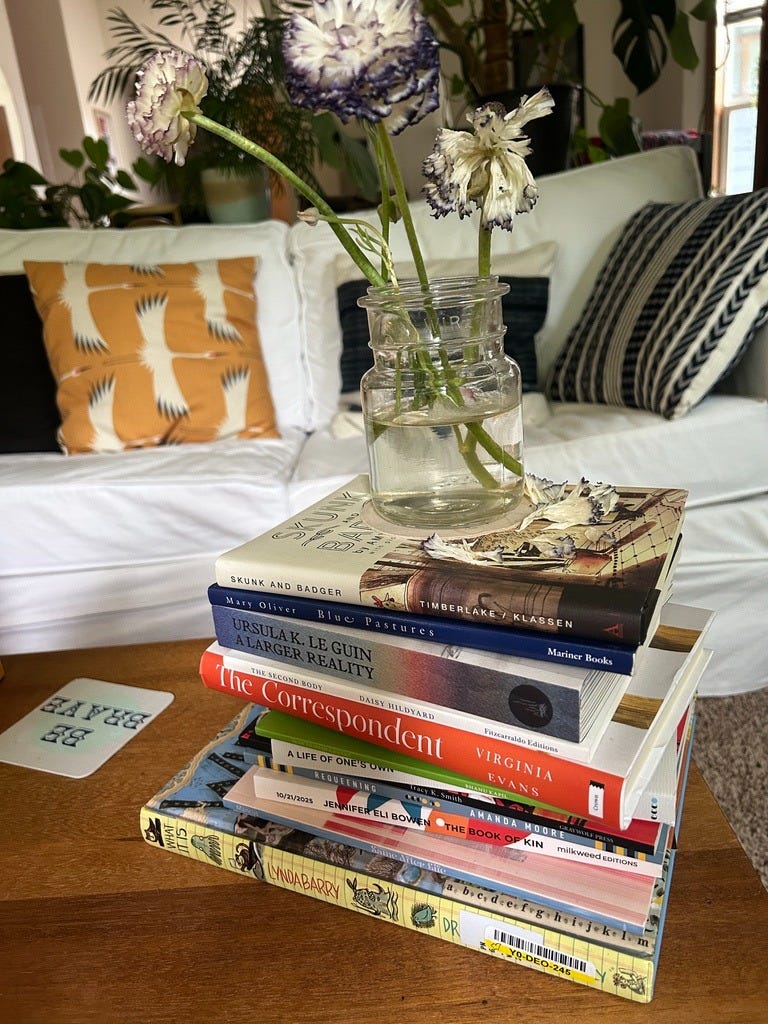
Within 24 hours of that conversation, my Crohn’s flared up. The truth is, it was already starting to flare when Jenn and I recorded last week’s podcast, but I was ignoring it because there were so many things I wanted to do. I should know by now that ignoring a flare will make the flare worse. I spent a large chunk of Saturday laying on the couch, staring at a pile of books I wished I had the energy to read and thinking about how the flowers sitting on top of the pile of books should really get thrown out.
I was feeling sorry for myself. I was angry with my body, but I was angrier with myself for not listening to my body. I wanted to be in my studio working on the JP book. Instead, I’d ignored my need to rest, and I was laid up on the couch watching the sun retreat into the mass of gray clogging the sky. Occasionally, the sun would re-appear and illuminate the dust motes floating above my head.
try stillness
On Monday, Jenn and I facilitated a Joyful Practice workshop at The Evergreen State College. Our workshop didn’t start until late afternoon. I was riding the waning side of this latest Crohn’s flare, and my energy was low. When I told Jenn about my flare, she reminded me of this JP principle: we go slow.
Jenn led the first half of the workshop, and when she asked us to write/draw about what our creative liberation might look like, this slip of paper fell out of my notebook:
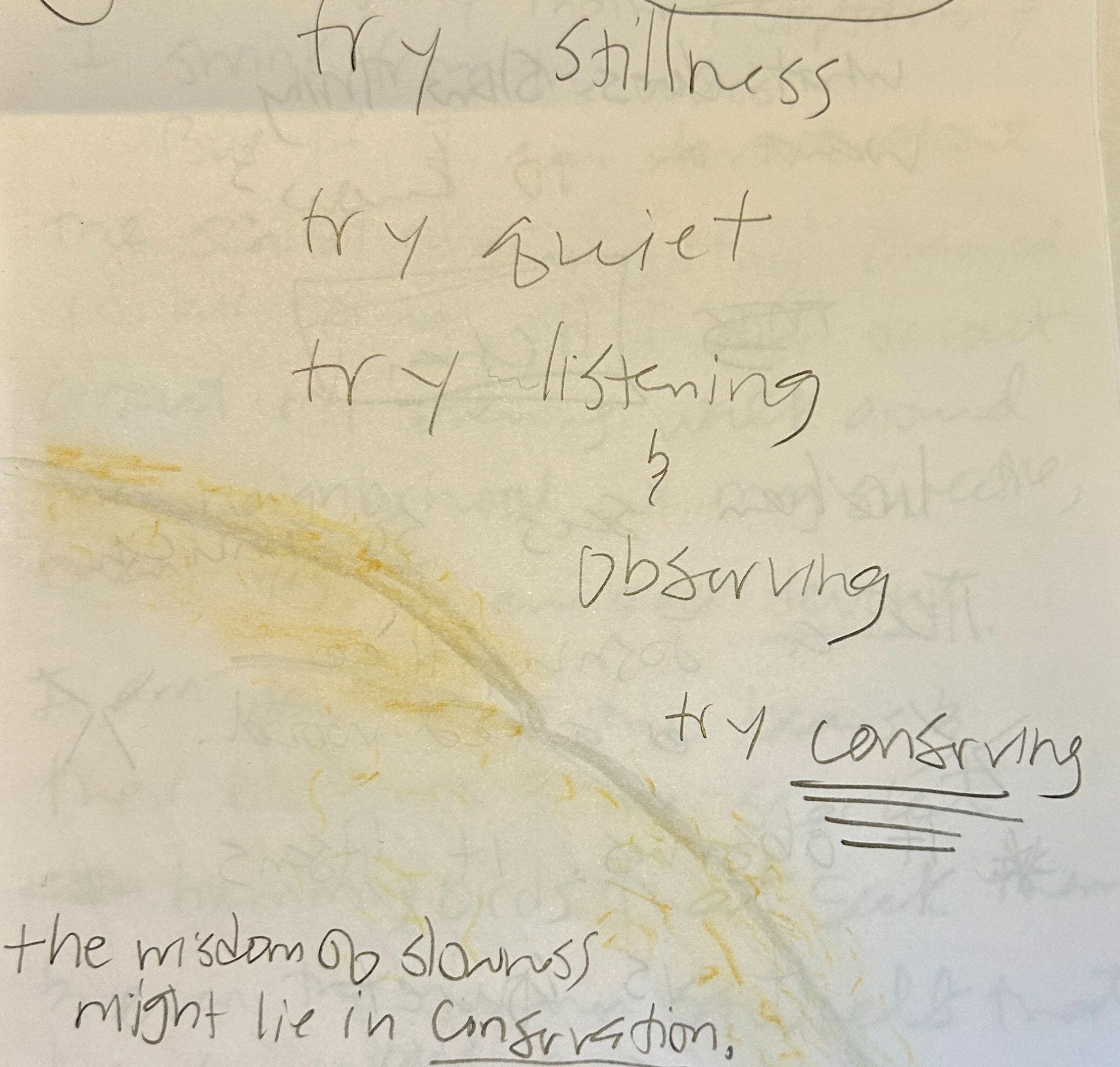
Try stillness. It felt like some kind of joke, the absurdity of trying stillness after having spent the better part of a week in a Crohn’s flare. I laughed and looked over at Jenn, wondering if she could feel the Baubo vibes entering the room.
In the 2nd half of the workshop, I would tell the story of Baubo and Demeter, how Demeter let the world fall into winter, and the only person who had the nerve to point out what a sorry mess she’d become was Baubo. I’m not saying there’s anything wrong with feeling shitty about feeling shitty. In fact, there’s often no way around it, but I was starting to resemble Demeter weeping by the well, asking, why me?
I was slipping into resentment, and I was actively avoiding listening to my body. It’s no accident I chose a Baubo prompt. Sharing the story of Baubo and Demeter forced me to admit (again) that the body knows what it knows, and its best to listen to it. If I was going to ask a group of people to think about how it would feel in their bodies to follow a creative impulse, and to consider how following that creative impulse might liberate them, then I’d better listen to the impulse of my own body. Even if that impulse was to rest.
I felt Baubo looking over my shoulder, watching me draw a big leaf maple tree and under its canopy, a bed. Beneath the bed I wrote: seriously, try stillness and how about a nap?
Well, shit I thought and remembered the toad and the lady on the couch. Regeneration = fucking rest, I wrote. I wondered (still wonder) what else Baubo has in store for me.
Please don’t take that as a challenge, Baubo. I hear you loud and clear. Thanks for coming back to visit.
***
The wisdom of slowness might lie in conservation. My body sent a pretty clear message when I wrote this all those weeks ago. And again last week, when it sent me the image of a toad during that soft, between-the-worlds time of almost-sleep.
I spent last week resisting rest because I thought it would keep me from the creative projects I was excited to work on. Last Saturday, my plan was to finish the Baubo section of the JP book. It’s no surprise she came calling to remind me that I was still working with her, even while I rested on the couch. A creative act can look like: paying attention to the retreating sun, the dying flowers, the dust motes shining in the air. It can also look like listening to the discomfort and pain of my body during a Crohn’s flare.
What if I try stillness when my body asks for it, not resentfully, but in the true, curious spirit of following my creative impulses?
Following Creative Impulses = Rest is Creative.
iterations
Like most of our Joyful Practice principles, we’ve been thinking for awhile about the idea of rest being creative.
For another take on rest being creative check out this post Jenn wrote last October.
I’ll leave you with this quote from Jenn’s post: “There are times when our creative work is not to make things, but to restore ourselves to ourselves.”