

The Haunted Body
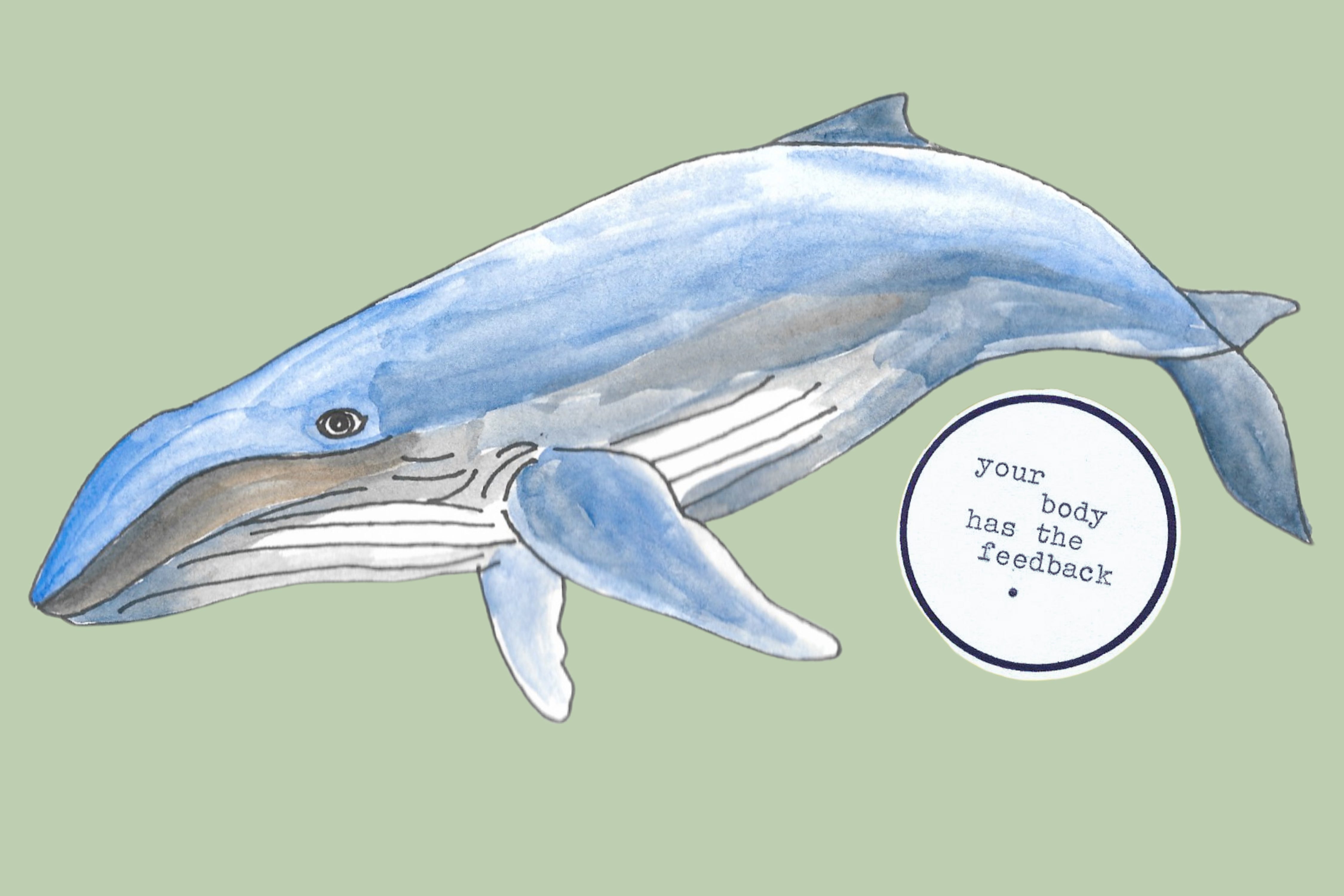
(your body has the feedback)

Note to reader: We’re wring about a Joyful Practice principle every week. These principles offer guidelines for approaching creative work. This week’s principle is: Your body has the feedback.
On Fridays, we release a podcast (The Joyful Practice Podcast) available here (on Substack), on Apple Podcasts, and on Spotify.
Also on Fridays, we offer an immersive prompt for creative exploration. This feature is called Prompt Portal, and you can find it here on Substack .
1.
When the results of my pelvic MRI came in, my surgeon wanted to meet with me. “Can you do telehealth at 8:30 tomorrow?” his scheduler asked me. I asked if we’d be done before 9. “Oh, for sure,” she said, and I took that as a good sign.
Because my surgeon talks fast, I recorded the conversation. I can now replay it in real time audio, and for the first few minutes I can hear the fawner in me performing casual breeziness. For instance, when he tells me about the posterior cul-de-sac, a cavity between the cervix and the rectum, he tells me it’s” just like a little neighborhood turnaround,” and I laugh at his explanation.
And then he tells me that my posterior cul-de-sac is “obliterated.”
In my audio recording, you can hear me go somewhere else.
He tells me I have deeply infiltrating endometriosis, that according to the MRI, my cull-de-sac has fused to my rectum.
We hadn’t gone looking for anything like this. The MRI had been to check out a cyst in my left ovary. This surgeon had been planning to remove some fibroids1 and had wanted to check out the cyst too. But now he’s not worried about the cyst. He tells me that the kind of surgery I may require is highly specialized. He tells me that the most common marker of endometriosis is chronic pain.
Then, after many many words, he says something that feels almost like tenderness. “There’s a part of me wondering, really? You don’t have any pain?”
I don’t think I’ve ever wept for my health before.
I don’t think I’ve ever wept for my body before.
But on that Friday, I wept. All weekend I wept.
The weeping was cathartic, like cold clear water.
I wept for all the ways I felt alone.
I wept for all the ways I knew that I was not alone at all.
Sometimes life feels like a fairy tale.
Sometimes the thing that happens is the thing you knew was coming, you just didn’t yet know its exact shape.
2.
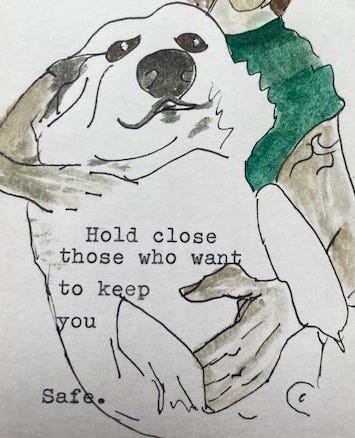
I love it when my dog uses his body to move my body, when his front legs become human arms and he pulls me into an embrace, or when he melts into a puddle on me.
The way he feels about me never changes.
The way he treats me never changes.
3.
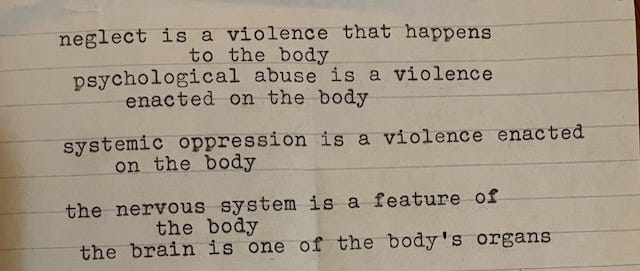
The body is an organism, not a metaphor.
Illness is not a result of negative thoughts, or worry, or a bad attitude.
But,
our cells respond to care.
Our cells respond to cruelty.
Our cells respond to stress.
Our cells respond to rage,
to grief, to sorrow.
The body houses a conversation between chemicals.
4.
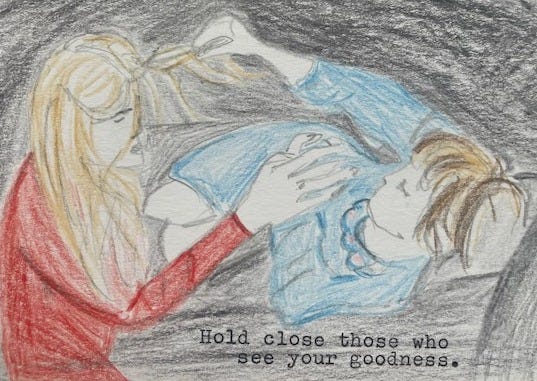
Your body has the feedback is one of the central principles that guide the joyful practice work that Sarah and I do. (Our cells respond to joy.)
To me, Your body has the feedback means that my body holds the truth of my experience. Feelings are my body telling me what’s true.
True for me. Subjectively true.
If I can locate what’s true, then it’s there for me to reckon with, even if I’d rather not.
I don’t, I can’t reckon with everything. But this practice (the practice of feeling, of allowing feeling, of working through feeling) has allowed me to reckon with more and more.
This post so far has turned out to be more of a personal essay than a creative process essay, but here’s what I’ve got:
When I write, I’m interested in how my work sounds as it leaves my body. When I read work out loud to another body (even if that body is on the phone or on Zoom), I can feel what lands and what falls.
Sometimes, when I’m lost in the work or frustrated2 by a challenge, I crave another body’s feedback. I want someone to engage with the work and tell me what hits them and where and how.
I’m less interested in what we call “constructive feedback” unless it’s delivered through the filter of the body—by which I mean, if a sentence ignited a filament of rage or distraction, I want to know! If a paragraph made a trusted reader yawn and disengage, I want to know! But a certain kind of feedback—red pen feedback complete with corrections and solutions—feels too much like hands on my body. I want the data on how my work traveled from my body to a reader’s body. And I want to indulge in the process of amending the work myself.
5.
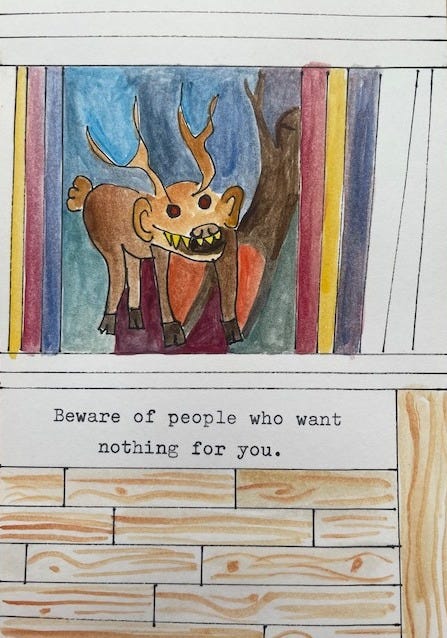
I don’t know how to explain the puzzle of deeply infiltrating endometriosis without any pain, except to say that it feels like my body was keeping a secret.
And also it feels like the fairy tale of Rumpelstiltskin, of the miller’s daughter spinning straw into gold in the middle of the night. Only, in my body’s corruption of the fairy tale the miller’s daughter (aka my body) isn’t making gold. She’s spinning the patriarchy’s wild demands into a small, invasive creature—a gremlin or a goblin or maybe even Rumpelstiltskin himself. He’s at once separate from her and a part of her, foul and beloved.
The body is a haunted alchemist, and I have nothing else to say.
In February I posted an essay here, The River Tells You You’re Good, about perimenopause and heavy bleeding, and that serves as a kind of prologue to this story.
Frustration, I’m finding, is a deeply embodied and rewarding part of art-making that I hope to write about soon.
So beautiful and profound. You're telling of your discovery, and how you are processing all of it moved me to tears - both for your experience and my own self-recognition that I saw reflected. I felt your words viscerally. I continue to be a huge lover of your writing.
I don’t want to overdo it on my comments (if that’s possible!), but so much here resonates. I’m especially loving the footnote about frustration, I’ve been trying read creative frustration as the signal of something about to emerge, and curious about how to prepare space for it from inside the frustration. Have you ever read “Fair Play” by Tove Jansson? One of the characters always builds shelves when she is about to go into a new project and swearing she’ll never work again, but her partner knows the signs.